
Enclosed Trailer Features Explained
Size, interior height, doors, construction, axles, and the inside details worth paying for. Here's what to look at before you buy an enclosed cargo trailer.
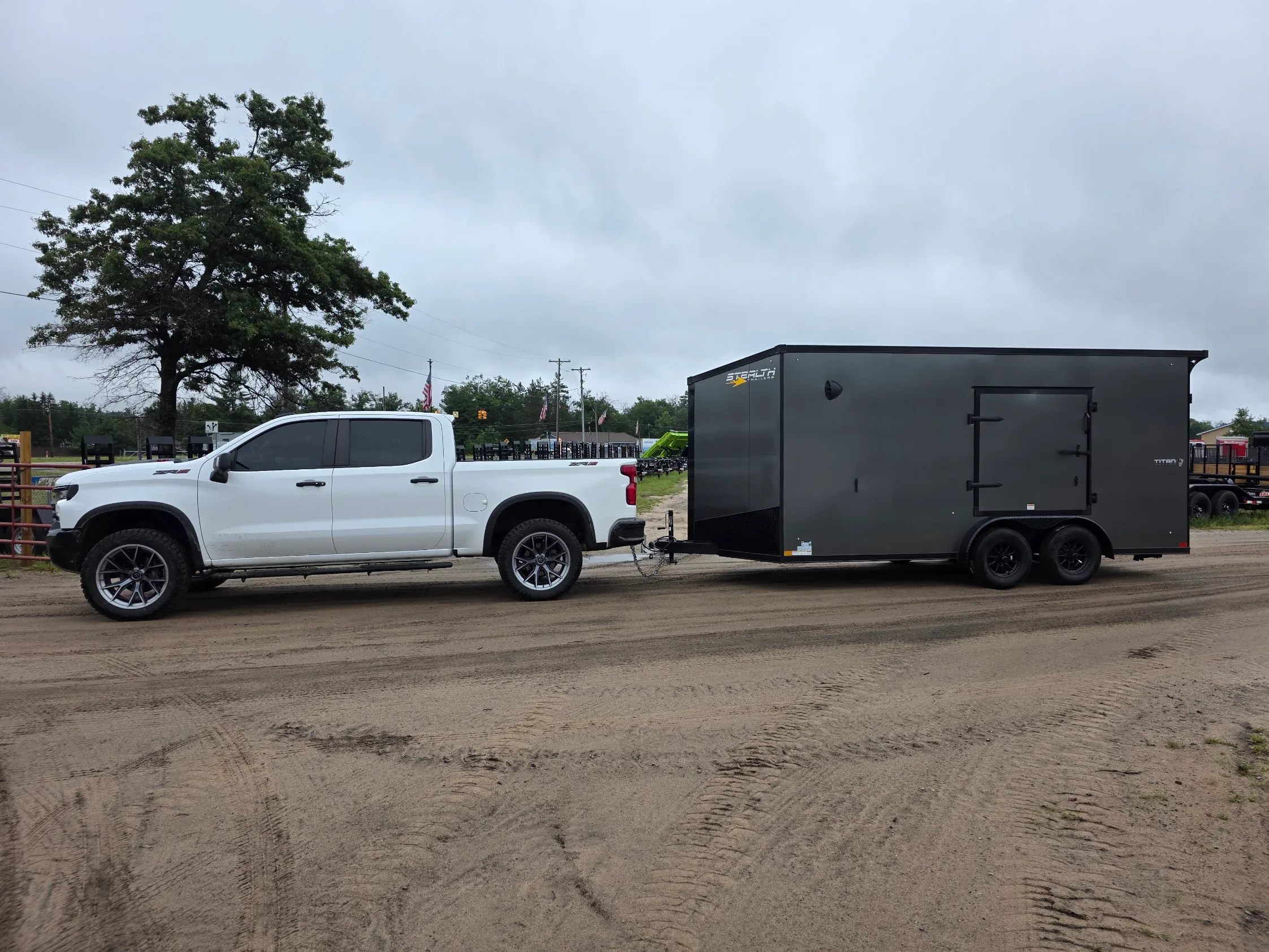
Two enclosed trailers can look nearly identical on the lot and still be a very different fit for your work. One might have a ramp door and a 7-foot interior; the other might have barn doors and a 6'6" ceiling. One rides on a single axle, the other on two. Those details decide whether your gear rolls in easily, whether you can stand up inside, and whether your truck is comfortable pulling it loaded.
This guide walks through the features buyers ask about most at USA Trailer Sales, in the order that usually makes the decision easiest: what you're hauling, how big the box needs to be, how you'll load it, and what it's built from.
Start with what goes inside
Before you compare brands or prices, list what you'll actually put in the trailer on a normal week. Tools and materials for a job site? A motorcycle or two? Household items for a move? Sleds for the winter, a side-by-side in the summer? The answer shapes every other choice on this page.
Measure the largest item you'll haul (length, width, and height) and write it down. Then think about how it gets in: does it roll, does it get carried, or does it get lifted with a forklift? If you want a deeper walkthrough of this step, our post on how your load type should drive trailer choice covers it in detail.
Common enclosed trailer sizes and what they're used for
Enclosed trailers are listed width first, then floor length, so a 7x14 is roughly 7 feet wide and 14 feet long. Our cargo trailer inventory runs from compact 5x8 units up to 8.5x24 tandem-axle trailers. Here's how the common sizes typically get used.
Bars are drawn to relative floor length and width.
Exact interior dimensions vary by manufacturer and model, because wall thickness and wheel wells take up space. Always check the listed interior measurements against the gear you measured.
Shop tip: Wider trailers (8.5 feet) usually ride with the wheel wells inside the box, while narrower trailers often have them outside or partly outside. If you're hauling something wide like a car or a side-by-side, the space between the wheel wells is the number that matters.
Interior height: 5'6", 6'6", or 7'?
Interior height is one of the most overlooked specs, and one of the hardest to change later. On our lot you'll commonly see 5'6", 6'6", and 7' interiors.
- 5'6" is common on small trailers like 5x8 and 5x10. Fine for low cargo, but most adults will have to stoop inside.
- 6'6" lets most people walk in comfortably and handles the majority of tools, boxes, and powersports.
- 7' gives you clearance for tall items, upright shelving, ladders on racks, and taller UTVs. If you'll be working inside the trailer all day, the extra six inches is noticeable.
Remember that a taller box also means more wind resistance on the highway and a taller overall trailer to store. Check your garage door or storage space before you commit.
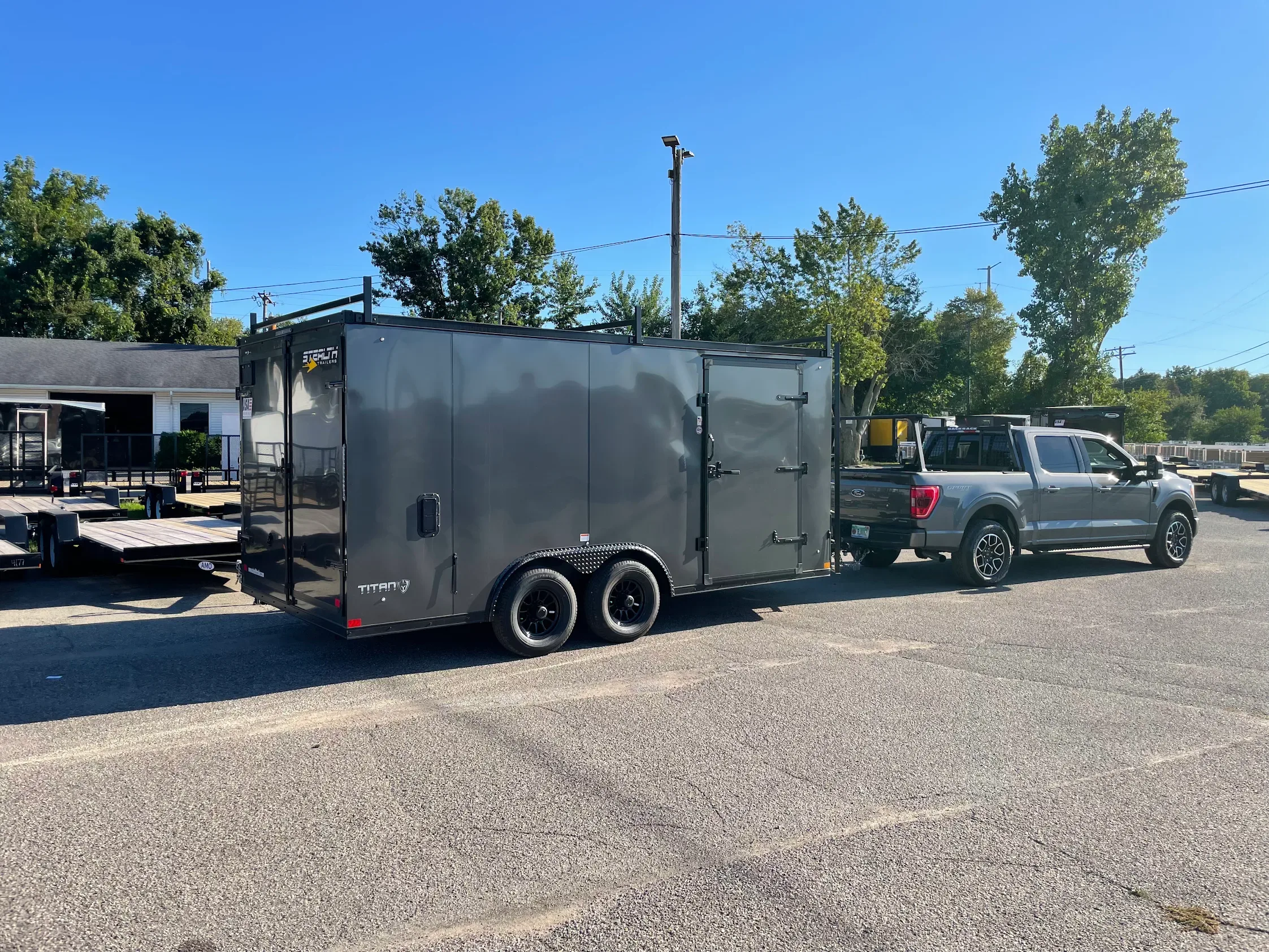
Ramp door vs. barn doors (and side doors)
The rear door is the feature you'll use every single time you load, so it deserves real thought.
Ramp door
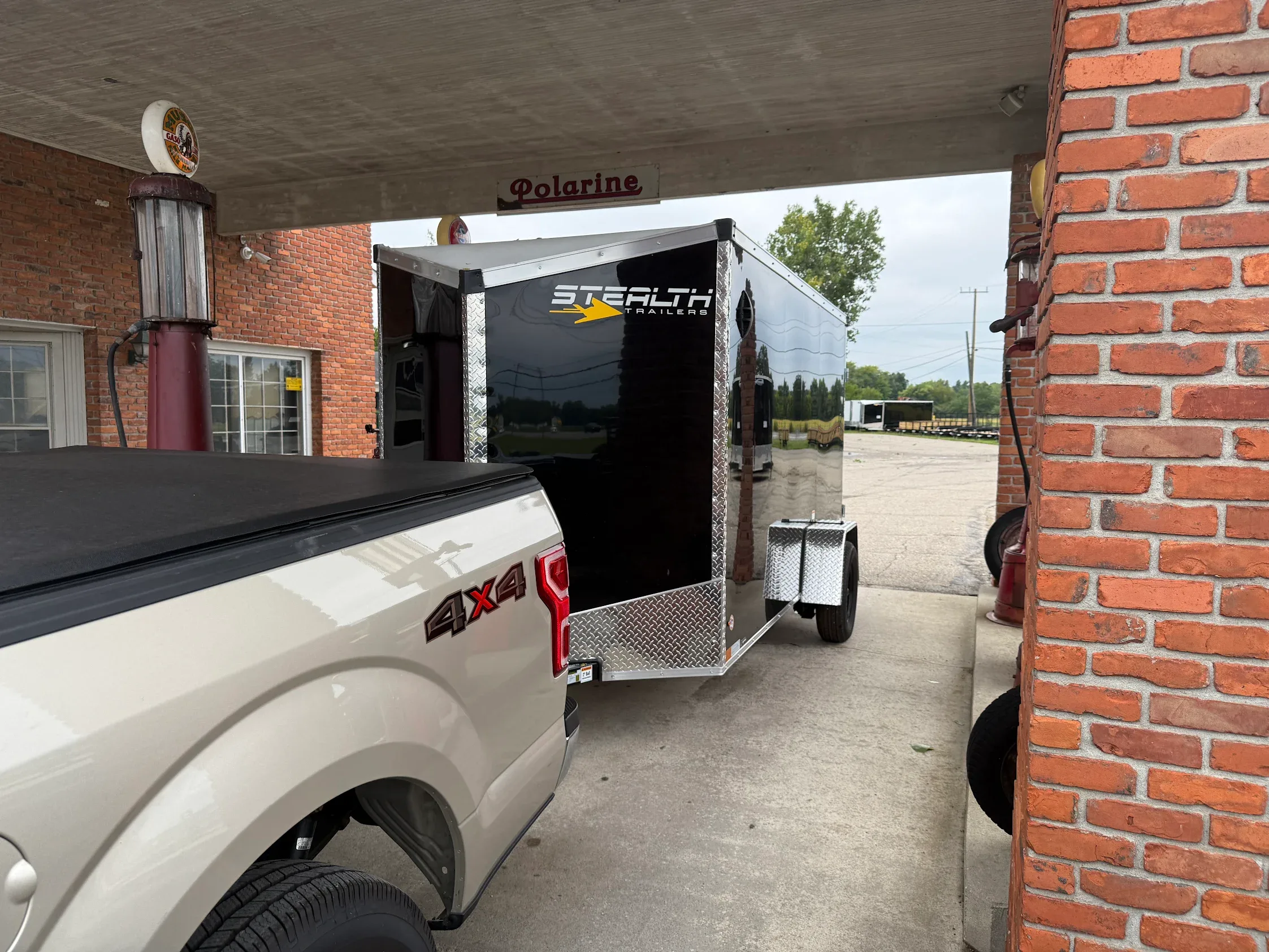
A ramp door folds down to become a loading ramp. It's the go-to choice for anything with wheels: motorcycles, ATVs, mowers, carts, dollies, and cars. Most of the enclosed trailers we stock come with a ramp door. When you look at one, check how heavy it feels to lift and whether it has spring assist, and look at the ramp's transition flap where it meets the ground.
Barn doors
Barn doors swing open to each side. They're popular with contractors because you can back right up to a loading dock, a building, or a pile of material without a ramp in the way, and you can load with a forklift. You'll see some trailers in our inventory listed as "contractor" models with barn doors for exactly this reason.
Side door
A curbside side door lets you grab a tool or a box without opening the rear. If you'll be in and out of the trailer all day, it's a feature most owners are glad they have. Check where the side door sits relative to any shelving you plan to install.
Construction: steel, aluminum, or both
How a trailer is built affects its weight, its price, and how it holds up to Michigan road salt. You'll typically find three approaches.
| Build type | What it is | Why buyers choose it |
|---|---|---|
| Steel frame, aluminum skin | Steel chassis and wall framing with aluminum exterior panels. | The most common build. Strong frame with a lighter exterior that won't rust. Good value. |
| All-steel | Steel frame and steel exterior. | Durable and typically lower cost. Heavier, and paint condition matters more over time. |
| All-aluminum | Aluminum frame and aluminum skin. | Lighter empty weight, so more of your payload goes to cargo. Strong corrosion resistance. Higher upfront price. |
If you haul through Michigan winters, it's worth reading our guide to trailer features that make a difference in Midwest winter hauling.
Screwless exterior
Many newer enclosed trailers use a screwless exterior, where the aluminum skin is bonded to the frame instead of fastened with rows of exposed screws. You get a smooth, clean look, fewer fastener holes where water could work its way in, and a much better surface for vinyl lettering or a full wrap. If your trailer doubles as a rolling billboard, this is a feature to look for. (More on that in what your trailer says about your business.)
Translucent roof
Some models we carry come with a translucent roof (often listed as a "Light Lid" roof) that lets daylight into the box. It makes it easier to find things inside during the day without turning on interior lights.
Axles, GVWR, and your truck
Single-axle enclosed trailers are lighter, easier to maneuver by hand, and usually less expensive. Tandem-axle trailers carry more weight, track more steadily on the highway, and can keep you rolling more safely if a tire fails.
The number to pay attention to is GVWR, the maximum the trailer is rated to weigh fully loaded. In our current enclosed inventory you'll see small single-axle trailers rated around 2,990 to 3,500 lbs, most tandem-axle trailers at 7,000 lbs, and larger 8.5-foot-wide units up to roughly 10,000 lbs. Subtract the trailer's empty weight from its GVWR and you get the payload you can actually carry.
Then check that your truck can tow the loaded trailer, not just the empty one. Our posts on single-axle vs. tandem-axle trailers and GVWR and payload ratings go deeper on both.
Inside features worth asking about
Once you've settled on size, doors, and build, the interior details are where a trailer goes from "a box" to a setup that works for you. Equipment varies by model and package, so ask our team what's included on the specific unit you're looking at.
- Tie-down points. D-rings in the floor or E-track along the walls. E-track is the most flexible if your loads change from week to week.
- Flooring. Plywood is standard on many trailers. Ask about upgraded or coated floors if you'll be hauling anything that leaks fluids or tracks in mud and snow.
- Wall liner. A lined interior protects the skin from dents from the inside and gives you something to screw shelving and hooks into.
- Interior lighting. Essential if you load early in the morning or late in the day.
- Roof and side vents. Help with condensation, fuel smells from powersports, and heat in the summer.
- Front shape. A V-nose or rounded front can add a little interior room up front and helps with airflow on the highway.
- Rear spoiler. Some models include one, mostly for airflow and appearance.
Matching the trailer to how you'll use it
Contractors and trades
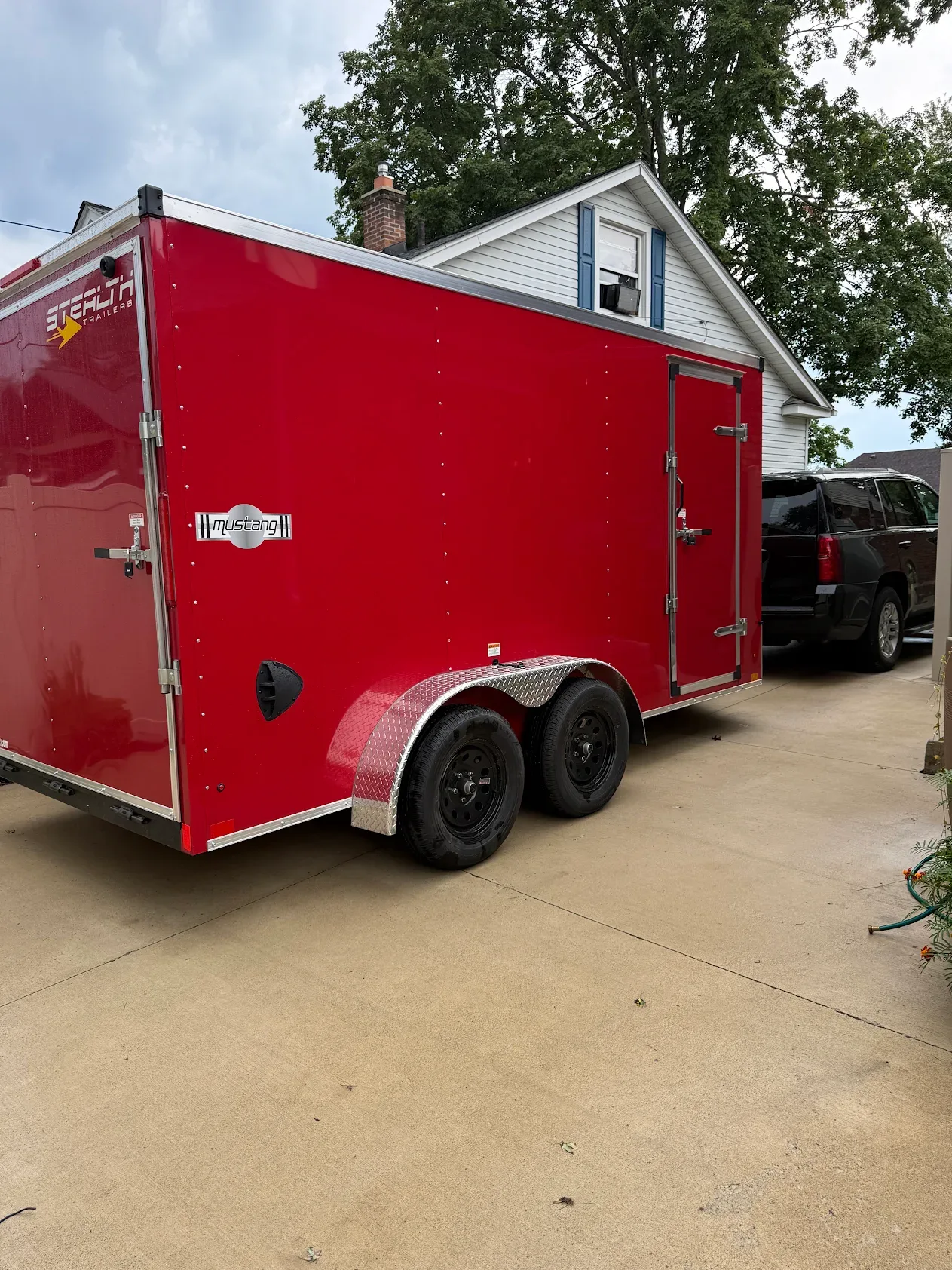
A 7x14 or 7x16 tandem axle with a 6'6" or 7' interior is a common starting point. Consider barn doors if you load from docks or with a forklift, a side door for quick access, and E-track or shelving to keep tools organized. A screwless exterior makes branding easy.
Motorcycles, ATVs, and side-by-sides
A ramp door is almost a must. Check width between the wheel wells, interior height for taller machines, and add tie-downs and wheel chocks. If your toys are big, look at full-width trailers or our toy haulers.
Snowmobiles
Dedicated enclosed snowmobile trailers are built differently from cargo trailers, with features designed for loading and unloading sleds. Browse our snowmobile trailers before settling on a standard cargo unit.
Cars
For vehicles, look at our enclosed car haulers. These are 8.5 feet wide with a ramp, and are rated for the weight of a vehicle plus gear.
Moving and personal storage
A 6x12 or 7x14 handles a lot of household moving. A ramp door makes dollies and appliances easier, and a 6'6" interior means you won't be ducking while you load.
Frequently asked questions
What size enclosed trailer should I get?
Start by measuring the largest item you'll haul and how often you haul it. For many buyers, a 6x12 is the best all-around size. Contractors and powersports owners often choose a 7x14 or 7x16 tandem axle, and anyone hauling a vehicle should look at an 8.5-foot-wide trailer.
Is a ramp door or barn door better?
A ramp door is better for anything with wheels. Barn doors are better if you load from a dock, use a forklift, or need to back up close to a building or material pile. Many buyers who haul a mix of both choose a ramp door with a side door for walk-in access.
Is an all-aluminum enclosed trailer worth the extra cost?
It can be. All-aluminum trailers are lighter, which leaves more of the GVWR available for cargo, and they resist corrosion well, which helps in Michigan winters. If you tow with a lighter vehicle or plan to keep the trailer for many years, the savings in weight and upkeep can justify the higher price.
Do I need a tandem-axle enclosed trailer?
If your loaded weight goes beyond what a single axle is rated for, or if you regularly tow on the highway with heavy cargo, a tandem axle is the safer choice. Single-axle trailers are a good fit for lighter loads, shorter trips, and buyers who need to move the trailer by hand.
Can I finance an enclosed trailer?
Yes. USA Trailer Sales offers trailer financing, and we take trade-ins at all seven Michigan locations.
Find the right enclosed trailer
We stock enclosed trailers from Stealth, Formula, US Cargo, Lightning, and more across seven Michigan locations. Tell us what you're hauling and our team will help you narrow it down.