
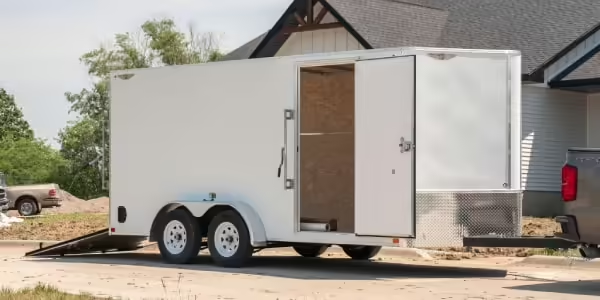
Understanding Trailer Weight Ratings & Payload isn’t just helpful — it’s critical. Whether you’re hauling equipment across town or towing a cargo trailer across states, knowing how trailers are rated and how much they can safely carry can save you time, money, and serious headaches. This guide breaks it all down into simple, actionable insights that help buyers make confident, informed decisions.
In this article, we explore the essentials of trailer weight ratings, payload capacities, towing compatibility, safety best practices, legal requirements, and tips for maximizing your trailer’s performance — all optimized for strong SEO and real-world value.
Trailer Weight Ratings & Payload: Why It Matters
When searching for the perfect trailer on USA Trailer Sales, understanding the numbers on the spec sheet is vital. These numbers dictate not only what you can carry, but also how safely and legally you can tow it.
Trailer weight ratings and payload numbers are more than technical jargon. They tell you:
- Whether your tow vehicle can handle the load
- What gear and cargo you can safely transport
- How to avoid fines, damage, and dangerous on-road situations
This isn’t just good practice — it’s essential knowledge for every trailer buyer.
Understanding GVWR (Gross Vehicle Weight Rating)
A trailer’s GVWR — Gross Vehicle Weight Rating — is the maximum safe weight the trailer can reach, including its own structure plus everything loaded on it. This number is predetermined by the manufacturer based on the strength of the frame, axles, tires, suspension, and brakes.
Example:
If a trailer’s GVWR is 7,000 lbs and the empty trailer (curb weight) is 2,500 lbs, then its maximum payload capacity is 4,500 lbs.
Always find the GVWR rating on the trailer’s VIN plate or data sticker. Never assume — always verify.
What Is Payload Capacity?
Payload capacity is the actual weight you can load onto the trailer — cargo, tools, equipment, passengers (if applicable), fuel, water, and accessories.
Formula:
Payload = GVWR − Trailer Curb Weight
Important: Exceeding the payload capacity can:
- Overload axles
- Reduce brake performance
- Cause tire failure
- Increase risk of accidents
When planning a load, always include everything: extra fuel, a toolbox, spare tires, and even heavier tires or upgraded wheels.
Curb Weight vs. Dry Weight vs. GVWR Explained
To choose the right trailer, you must understand the difference:
Curb Weight: The trailer’s weight with all standard equipment and operating fluids — no cargo.
Dry Weight: The weight without any fluids or added equipment.
GVWR: The maximum allowable total weight of the trailer and cargo combined.
This matters because many trailer listings show dry weight, which may mislead buyers who are planning real-world loads. Always use curb weight for calculations.
Tongue Weight Explained
Tongue weight is the downward force the trailer places on your truck’s hitch ball. It’s typically recommended to be 10–15% of the total trailer weight.
If tongue weight is too low, your trailer may sway. Too high, and your rear vehicle suspension can sag, compromising steering and braking.
Tip: Use a tongue weight scale or scale at a truck stop before long trips.
How to Calculate Trailer Payload (Step‑by‑Step)
Let’s walk through a quick example:
- Trailer GVWR: 7,000 lbs
- Trailer curb weight: 2,400 lbs
- Payload capacity = 7,000 − 2,400 = 4,600 lbs
That means 4,600 lbs is the maximum weight you should load onto this trailer.
Always round down and leave a margin for safety.
The Role of Axle Rating
Trailer axles are rated for maximum weight individually. If a tandem-axle trailer has two 3,500 lb axles, its combined axle rating is 7,000 lbs — but that doesn’t always mean the GVWR is 7,000 lbs. The manufacturer may rate the GVWR lower based on other factors like frame strength.
Remember: The lowest rated component often determines the trailer’s real-world capacity.
Why Exceeding Weight Limits Is Dangerous
Overloading a trailer isn’t just about potential fines. It can result in:
- Poor braking response
- Increased sway and instability
- Tire blowouts
- Frame or suspension damage
- Loss of control
Staying within weight ratings isn’t optional — it’s about safety for you and everyone on the road.
Where to Find Trailer Weight Ratings
Almost all trailers have a data plate that lists:
- GVWR
- GAWR (Gross Axle Weight Rating)
- VIN number
- Tire size and pressure specs
If you don’t see this sticker, ask your dealer before purchasing.
Common Buyer Mistakes With Weight Ratings
Many buyers make avoidable errors, such as:
- Ignoring cargo weight
- Forgetting accessories like toolboxes
- Assuming all trailers are rated the same
- Not weighing the trailer after upgrades
These mistakes lead to risky towing setups — avoid them by understanding ratings first.
How Weight Affects Braking and Suspension
Heavier loads directly affect:
- How quickly you can stop
- How well the trailer tracks
- Wear on suspension components
Using proper brake controllers, weight distribution hitches, and regular maintenance prolongs trailer life and increases safety.
Trailer Weight and Fuel Efficiency
The heavier the trailer, the harder your vehicle must work. This means:
➡ Increased fuel consumption
➡ More wear on engine and transmission
➡ Potential overheating
Planning loads efficiently can significantly reduce operating costs.
Choosing a Tow Vehicle That Matches Your Trailer
Always verify that your truck or SUV’s towing capacity exceeds the trailer’s GVWR. Many buyers forget to include the trailer’s loaded weight in their calculations — don’t make this mistake.
Rule of thumb: Tow vehicle capacity should be 10–15% higher than expected total trailer weight.
DOT & State Laws on Trailer Weight Compliance
Different states may have maximum allowable weights for highways:
- Some require special permits for loads above certain weights
- Weigh stations may check compliance
- Exceeding legal limits can result in fines
Always check local regulations before travel.
Using a Weight Distribution Hitch Correctly
A weight distribution hitch transfers load more evenly across axles, improving:
- Steering
- Braking
- Ride stability
This is particularly useful for heavier trailers with significant tongue weight.
Common Trailer Types and Typical Weight Ratings
| Trailer Type | Common GVWR Range | Typical Use |
|---|---|---|
| Utility Trailer | 2,000–7,000 lbs | Yard work, light hauling |
| Enclosed Cargo | 3,000–10,000 lbs | Tools, goods, equipment |
| Car Hauler | 5,000–14,000 lbs | Transport vehicles |
| Flatbed | 7,000–20,000+ lbs | Heavy machinery |
These are general examples — always check actual specs.
Trailer Weight Myths Debunked
Myth: If it looks balanced, it’s safe
Fact: Visual checks aren’t reliable — always weigh it formally.
Myth: Bigger trailers can always carry more
Fact: Bigger does not mean stronger unless rated accordingly.
Always rely on published ratings.
Seasonal Considerations for Trailer Payload
Rain, ice, and wind all impact towing safety. A fully loaded trailer in adverse weather demands:
✔ Slower speeds
✔ Longer stopping distances
✔ Extra attention to weight distribution
Plan accordingly.
Maintenance Tips for Heavy Payloads
To support consistent heavy use:
- Check tire pressures weekly
- Grease bearings
- Inspect brakes frequently
- Replace worn tires promptly
Regular maintenance keeps your trailer safe and long‑lasting.
How to Upgrade Trailer Capacity Safely
You can upgrade certain parts:
✔ Higher-rated axles
✔ Stronger tires
✔ Better suspension
However, upgrades must be approved and balanced with overall design limits.
Trailer Weight Ratings & Payload Summary
Understanding trailer weight ratings and payload empowers you to:
- Choose the right trailer with confidence
- Load safely and legally
- Protect your investment
- Tow with peace of mind
Always verify ratings, calculate your loads, and double‑check compatibility with your tow vehicle.
Frequently Asked Questions
What does GVWR mean and why is it important?
GVWR is the maximum allowable weight of the trailer and its cargo. It ensures you don’t exceed safe design limits.
Can I overload my trailer a little bit?
Even small overloads can affect brakes, tires, and handling. Never exceed rated capacities.
How do I find my trailer’s curb weight?
Check the manufacturer’s spec plate or weigh the trailer at a public scale.
Does payload include accessories like toolboxes?
Yes — everything added to the trailer counts toward payload.
Do small trailers require a weight distribution hitch?
Not always, but it depends on tongue weight and trailer size.
Is tongue weight the same as total trailer weight?
No — tongue weight is only the downward force on the hitch.
Conclusion
Understanding trailer weight ratings & payload isn’t optional — it’s essential for safety, legality, and optimal performance. By knowing your GVWR, calculating your payload accurately, and matching your trailer to the right tow vehicle, you set yourself up for successful, stress‑free hauling.
For expert advice and to view a wide selection of trailers with accurate weight ratings, visit USA Trailer Sales today.